Native Plant Sanctuary

The Beginning Years (2000-2004)
The Native Plant Sanctuary was developed within Canby Community Park beginning in the Fall of 2000. The project to create the Native Plant Sanctuary was part of a much larger initiative by Matilda Deas, Canby City Planner. In Matilda’s words, the objective of our project was to begin the first phase of a multi-phased project to restore and enhance the entire riparian area and associated wetlands within the approximate 3.5-acre site to provide better quality fish and wildlife habitat and develop long term partnerships both at the local and regional levels.
The 3.5‑acre restoration site (within Canby Community Park) included a network of wetlands fed by natural seeps and springs, a small stream, and a shallow pond connected to the river through a culvert. The project launched a long‑term effort to restore and enhance the riparian corridor and associated wetlands, improving habitat for fish and wildlife while building strong partnerships across the community and region. Early work focused on addressing challenges such as warm summer water temperatures, an aging culvert, and the dominance of reed canary grass, while beginning re‑vegetation efforts and exploring future engineering solutions to improve water quality.
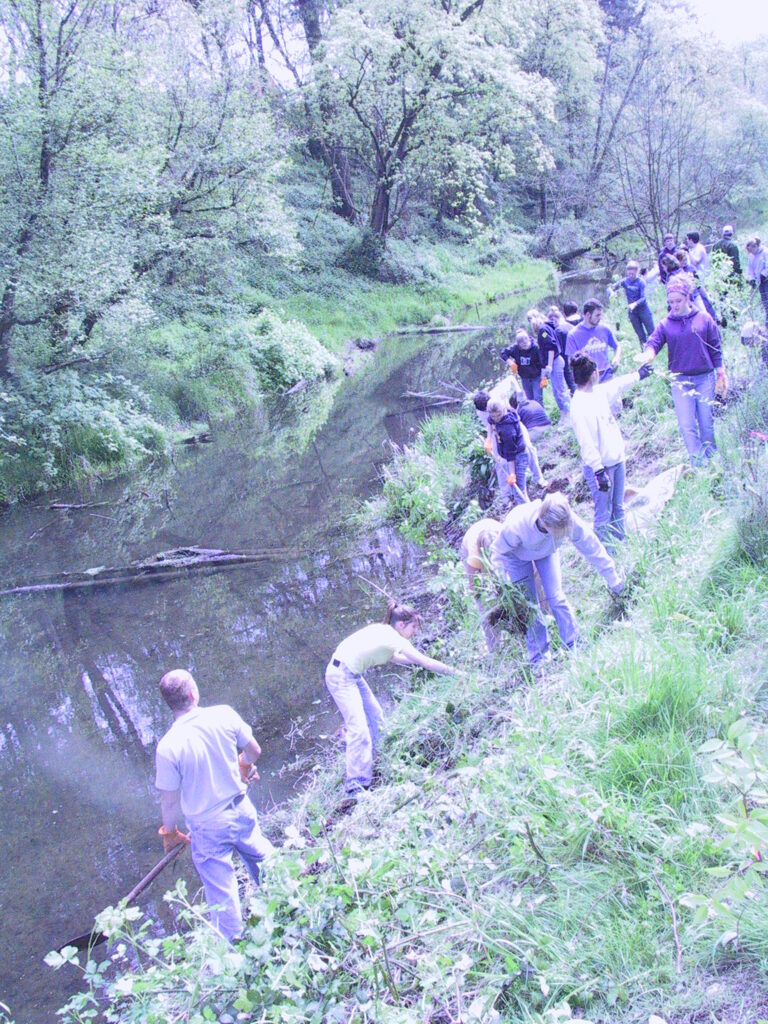
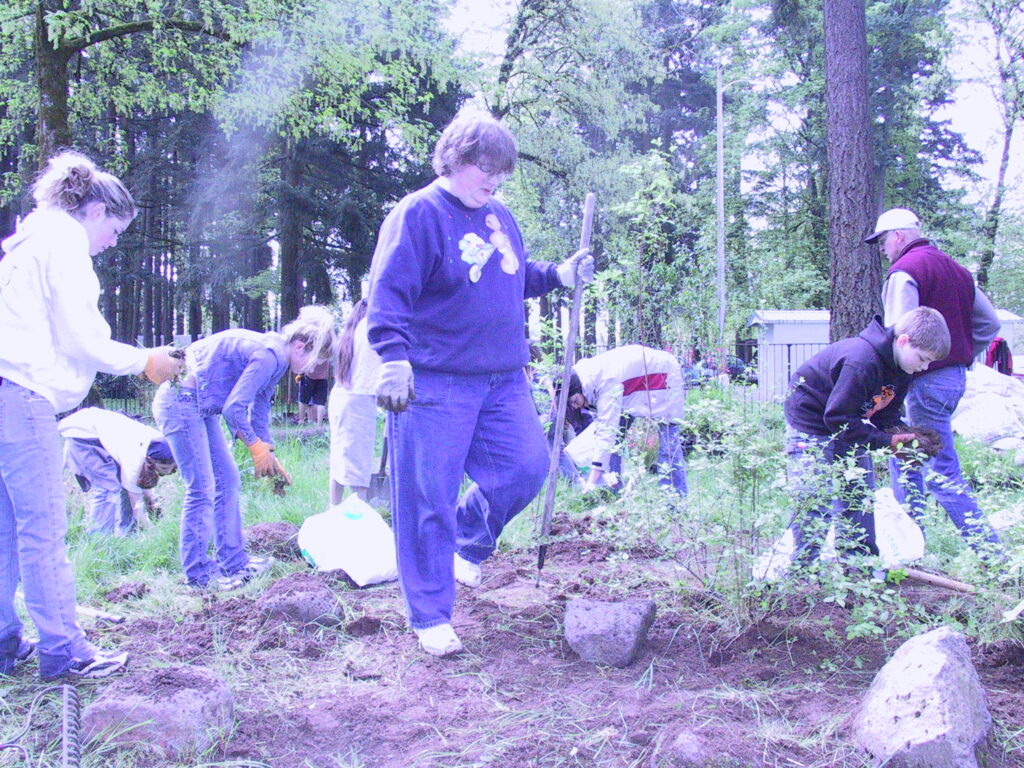
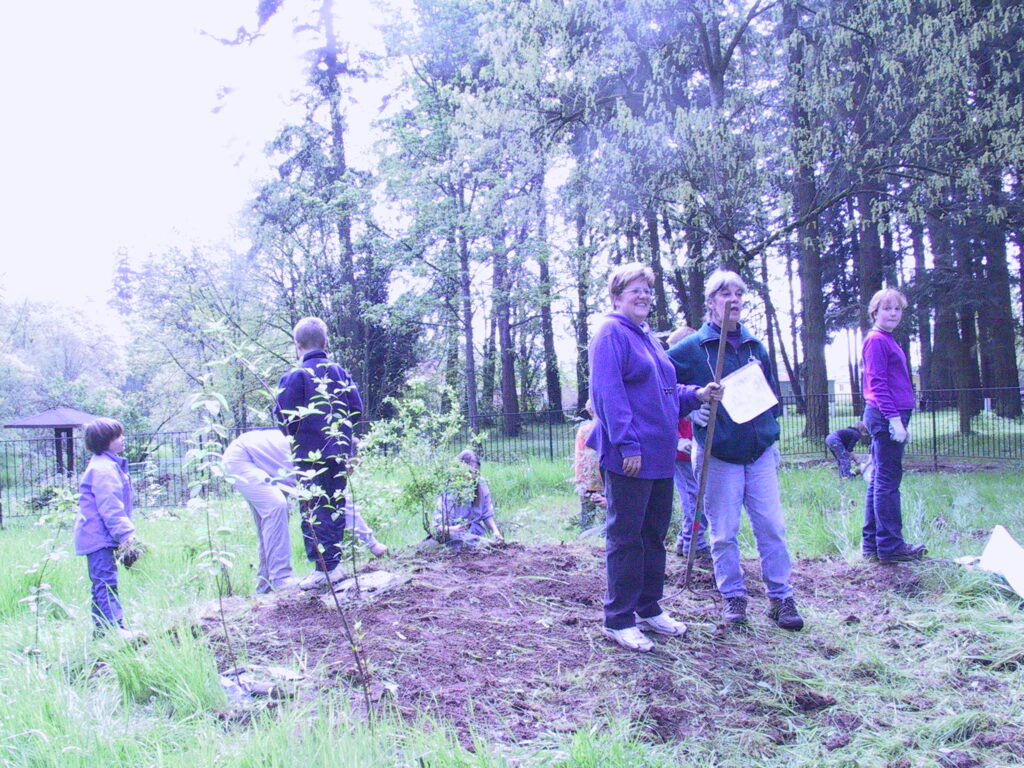
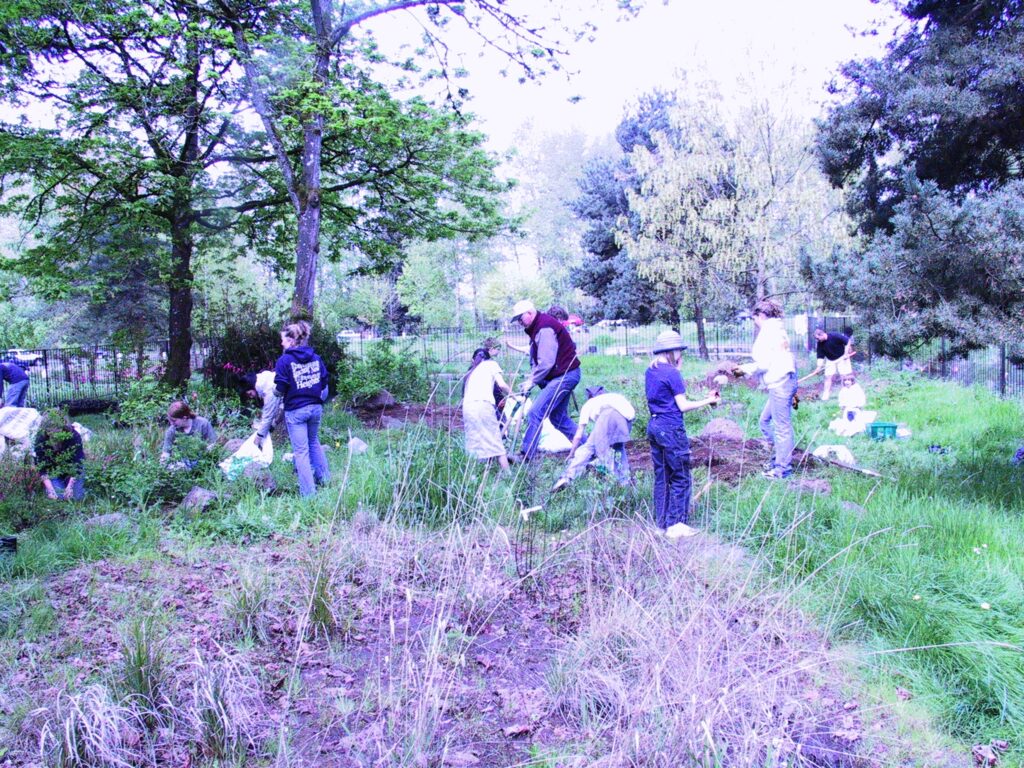
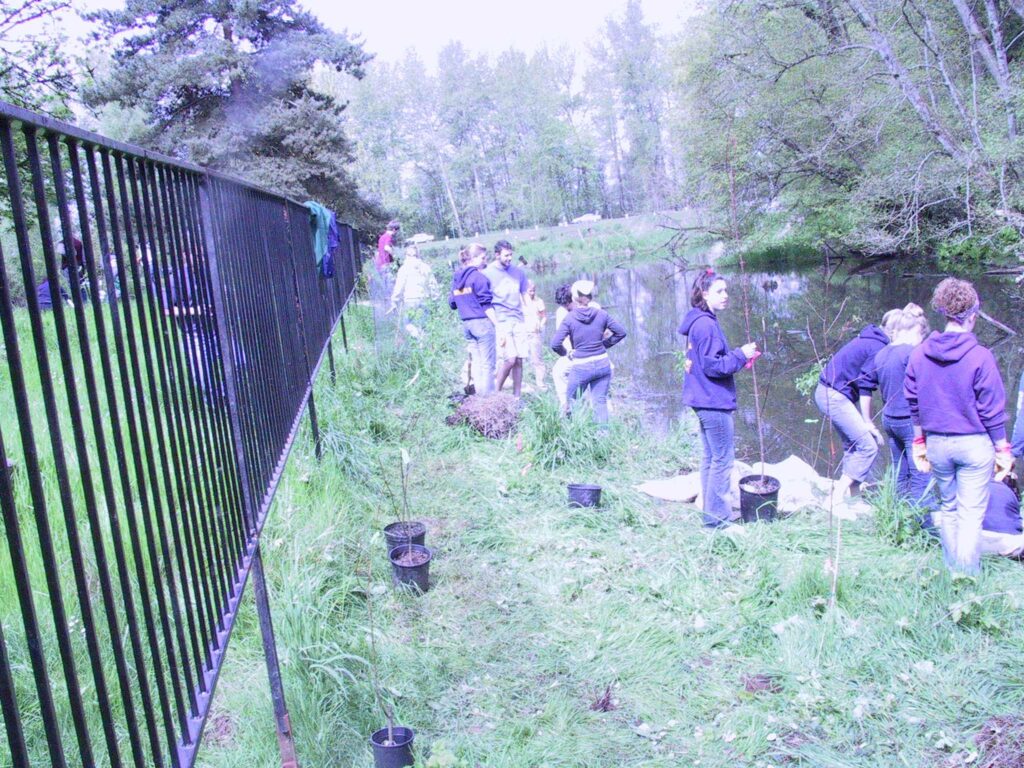
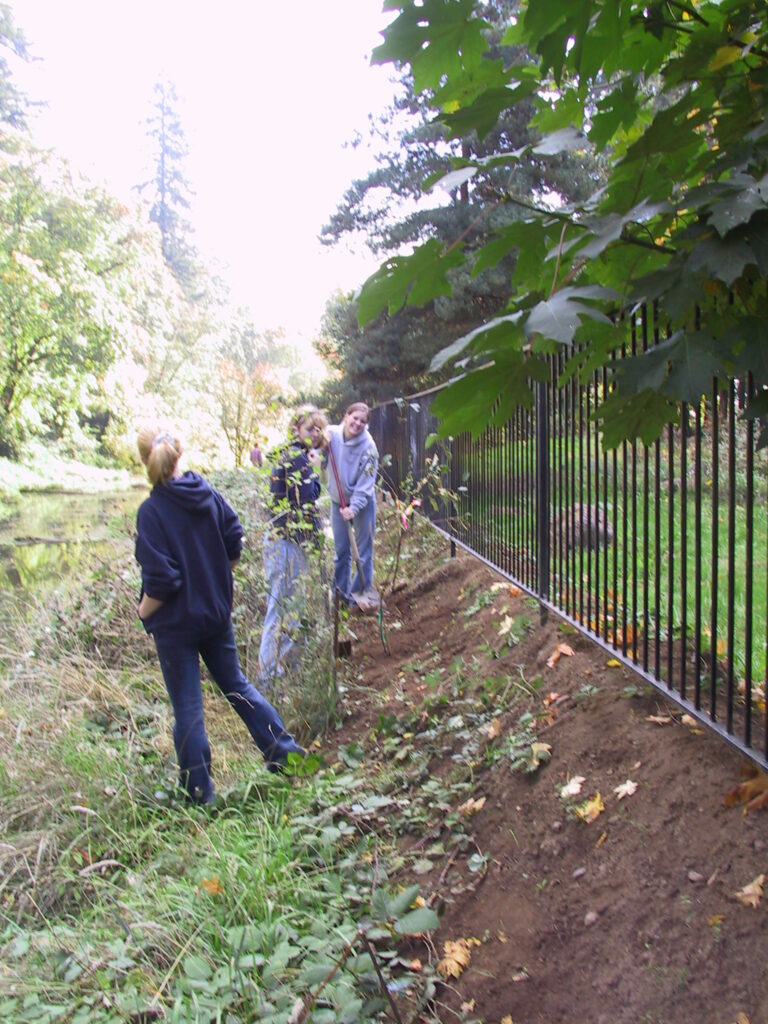
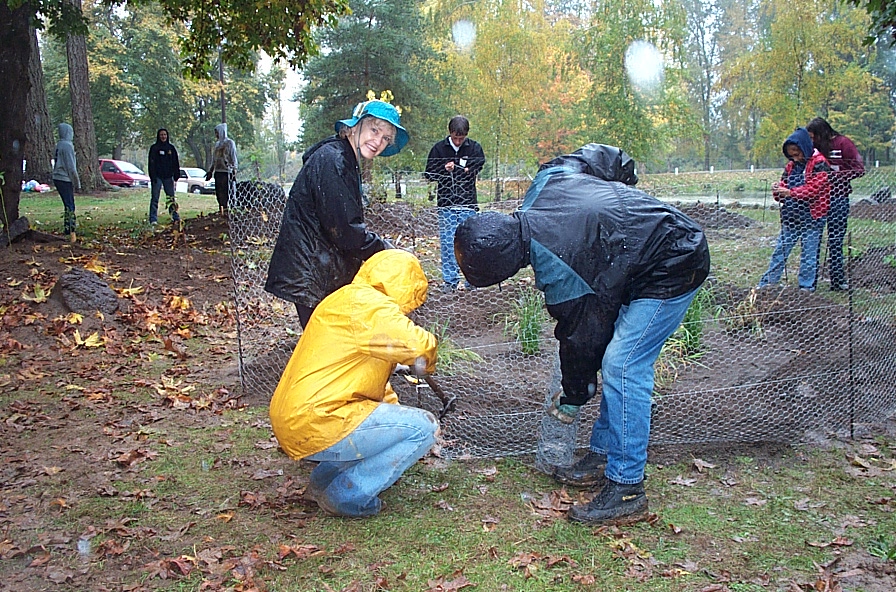
Community involvement was central from the beginning. Students from Ackerman Middle School monitored water quality, sharing their findings online, while local teachers, volunteers, and professionals helped design and build a visible wetland demonstration site (Native Plant Sanctuary) that invited public curiosity and hands‑on learning. More than 500 volunteers participated in work parties between 2001 and 2004, planting native species, installing protective materials, and testing innovative methods—such as using recycled coffee bags as biodegradable mulch—to give young plants a fighting chance against invasive grasses.
The project continued to grow through strong partnerships, creative problem‑solving, and a shared commitment to long‑term stewardship. Canby High School Horticulture students propagated native plants for future plantings, Canby High School metal shop students built the fence, community organizations and businesses contributed materials and expertise, and volunteers of all ages helped remove invasive plants and plant native plants. The goal of the restoration effort was to strengthen the wetland habitat, deepen community connections, provide a learning lab for students of all ages, and ensure that this unique wetland area thrives for generations to come.
The Native Plant Sanctuary fell into disrepair after 2004 and quickly became overgrown with Himalayan Blackberries, Wild Cucumber, and numerous other invasive plants. The Canby Parks Department was approached in 2023 by three community members who asked that they be given permission to restore the sanctuary (Tammy Baldwin, David Kleinke, Gina Taylor). With permission given they began the restoration work in March 2023 by removing the invasive plants and then mulching, planting native plants, and building trails.
Over 100 community members participated in restoring the sanctuary. Joining the team and making significant contributions in time and resources to restore the sanctuary were Liz Belz-Templeman, Katherine Leppek, Fred Merchant, Nancy O’Harrow, and Bill Wilkins.
As the invasive plants were removed and the new native plants were being introduced the Canby Garden Club assumed the role of leading the effort. The garden club donated financially and numerous native plants and made signs identifying the plants. In order to ensure ongoing support to maintain the sanctuary the Canby Garden Club made the sanctuary an ongoing project of the club.
The next phase of the sanctuary was to provide it as a platform for our schools to use with their nature programs. Liz Belz-Templeman, CHS Teacher, was the first to begin using the sanctuary as an augmentation to her class in 2025. She provided her students with the opportunity to select, layout, and plant more native plants in the sanctuary. Her class also developed signage for the sanctuary to help our guests understand the importance of native plants to our ecosystem.
Anne Bangs and Katie Moshofsky integrated the Native Plant Sanctuary into the AP Biology and Environmental Science classes in 2026. The learning lab is now more than a dream of Matilda’s. Thanks to these gifted teachers it is now beginning.
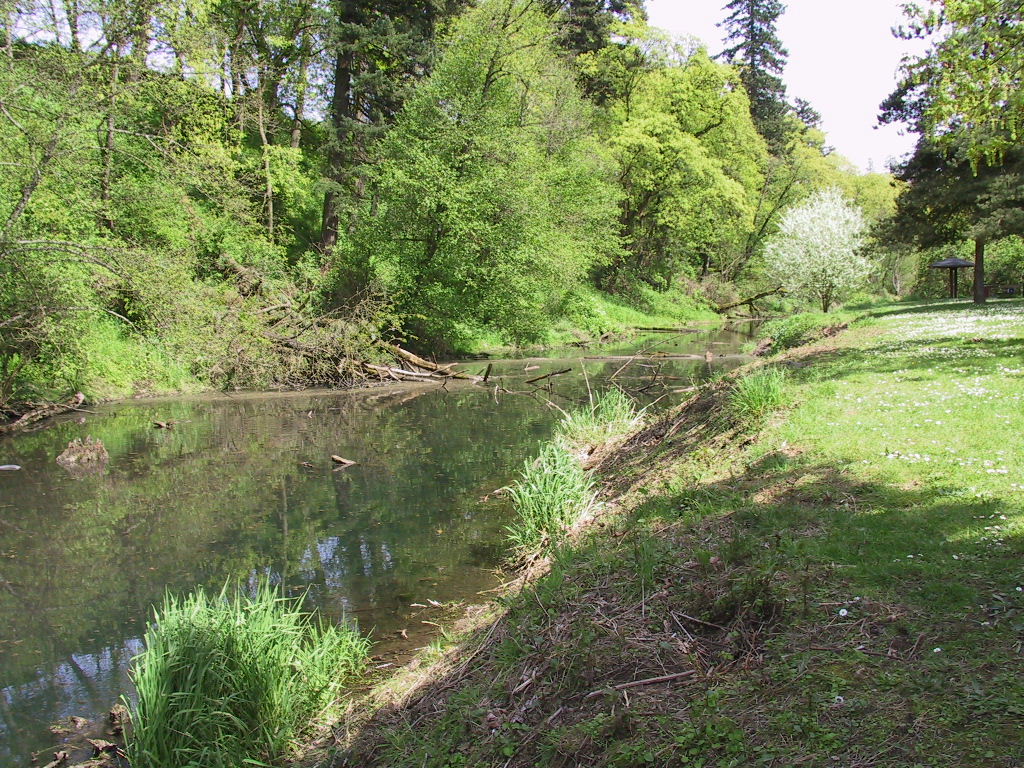
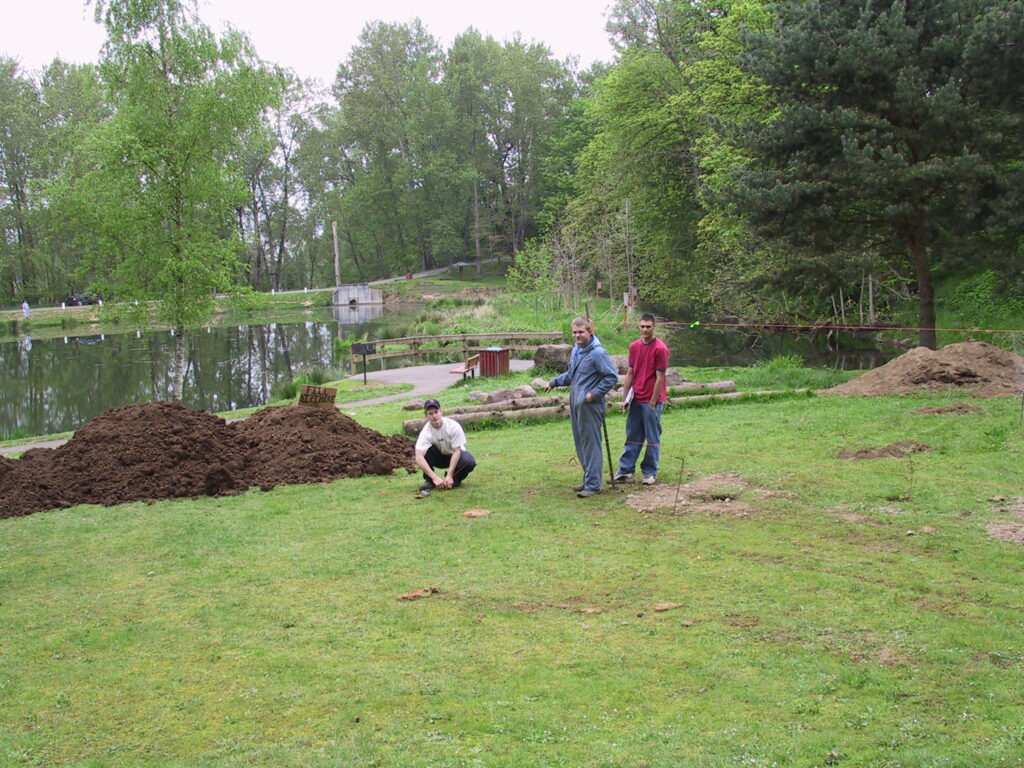
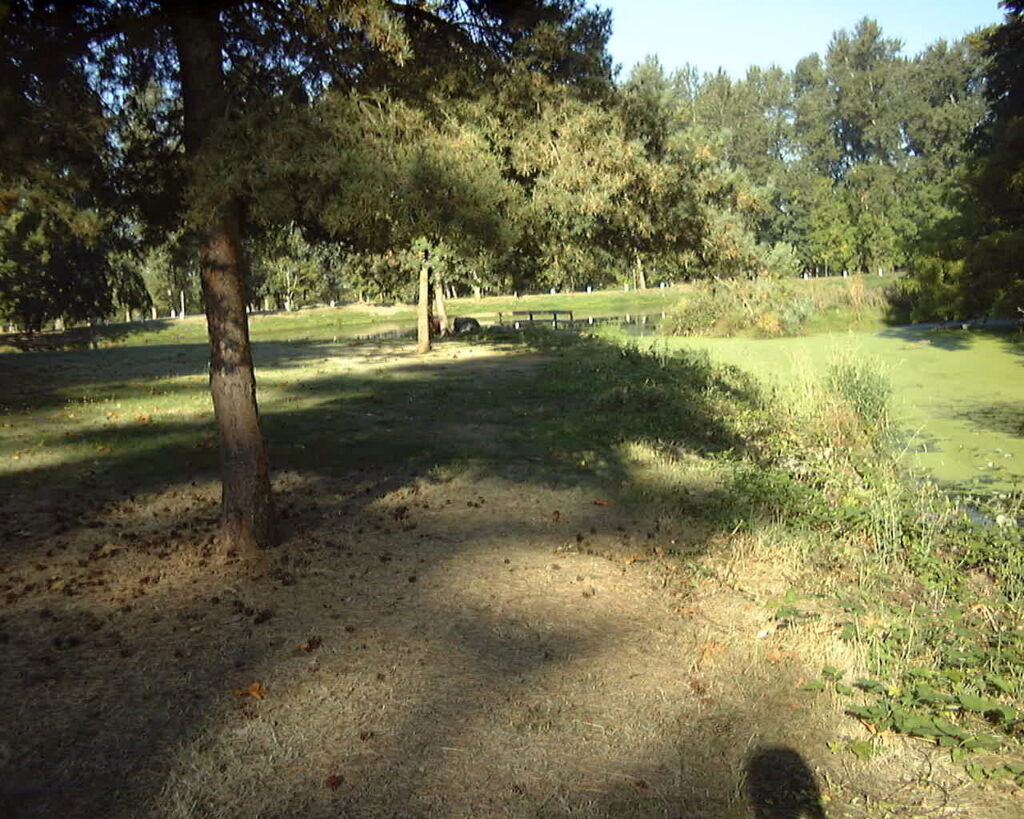
The following photos are from events in 2001-2004 when the invasives were initially removed, natives planted, and the fence put up. The last photo shows the site before the Native Plant Sanctuary was put in.